Your guide to Nepal
Top destinations in Nepal

Kathmandu
Surrounded by Himalayan foothills, Kathmandu is a gateway to adventure. But its exquisite temples, ancient squares and vibrant streets make the Nepali capital a destination all its own.

Pokhara
Spectacular scenery and world-class treks await in Pokhara. Drift across its mirror-like lake, explore serene temples, or get your adrenaline fix on zip lines and bungee jumps.

Bharatpur
The elephant-filled forests of Chitwan National Park draw visitors to Bharatpur. But this growing city in Nepal’s lowland is a hub of culture both modern and traditional.
Nepal: fast facts
| Language | Nepali |
|---|---|
| Currency | Nepalese rupee (Rs) |
| Time zone | UTC+5:45 (NPT) |
Nepal highlights
Mountain hikes
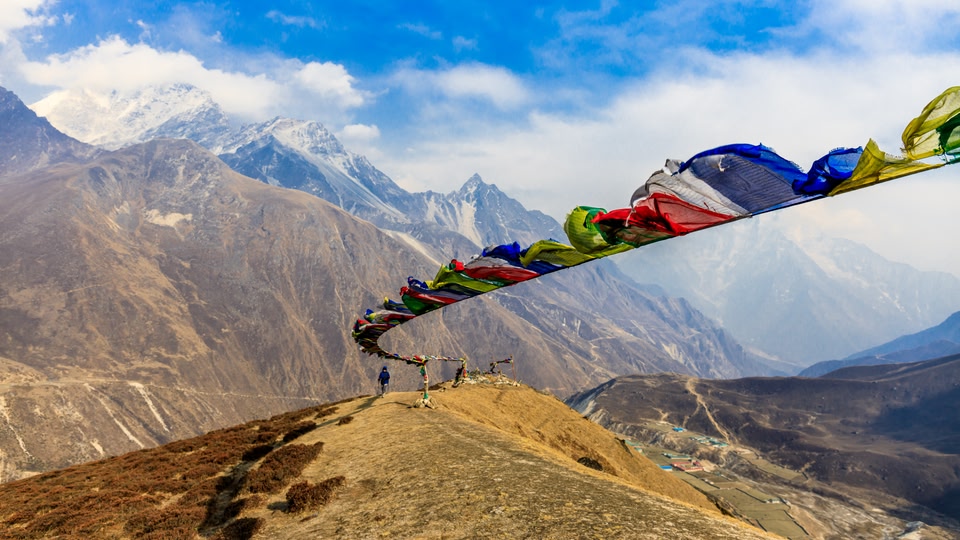
Taking a multiday hike is one of the most iconic things to do in Nepal. For a journey through the Himalayas’ most cinematic scenery, hit the Annapurna Circuit, a 118-mile trail slashing through lush forests, alpine passes and traditional villages. For epic views without the crowds, try the Manaslu Circuit, which explores the Nepali–Tibetan border before ending at the base of Manaslu, the world’s eighth-highest peak.
Sacred sites
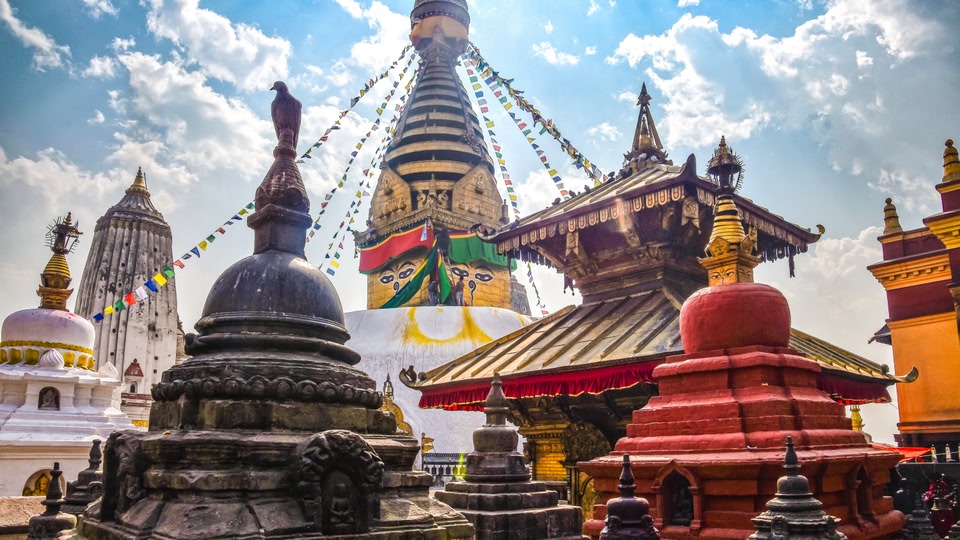
Home to large Hindu and Buddhist communities, Nepal blends daily life with deep spiritual traditions. Visit the Buddha’s birthplace in the town of Lumbini, whose monasteries and temples are full of orange-robed pilgrims year-round. Don’t miss Kathmandu’s Swayambhunath Stupa, an ancient Buddhist shrine teeming with playful monkeys. Or check out Changu Narayan Temple, the Kathmandu Valley’s oldest active Hindu temple.
Local homestays
For a taste of Nepal’s world-famous hospitality, book a homestay in a Himalayan village. These family-run guesthouses let you experience daily life, food and culture firsthand. From learning to make traditional crafts to sharing home-cooked meals, you’ll come home with stories that go beyond most visitors’ experiences. Plus, homestays ensure your money goes toward helping local communities.
Things to do in Nepal
Top attractions
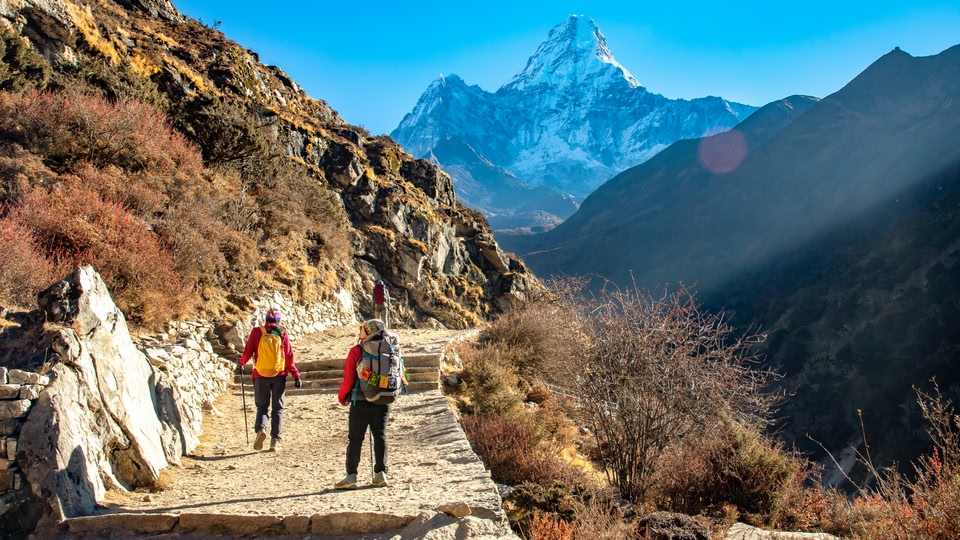
Few trails are as legendary as Everest Base Camp. This popular route is more accessible than many Himalayan hikes, but make sure you’re fit for up to two weeks of high-altitude trekking. In Kathmandu’s Durbar Square, explore pagodas, temples and monuments revealing centuries of history. Nearby, don’t miss Boudhanath Stupa, a towering Buddhist landmark believed to hold the remains of past Buddhas.
Family friendly
Pokhara is a perfect base for active families. Glide across Phewa Lake in a rowboat or explore the eerie depths of Gupteshwor Mahadev Cave, one of Nepal’s longest. From here, take the Poon Hill trek, an accessible multiday hike reaching 10,532 feet, with well-kept trails and stunning views of the Himalayas.
Beaches
Nepal’s mountains get most of the attention, but its riverside beaches are also worth exploring. White-water rafting meets pristine white sands at the Trishuli River’s beaches, about three hours from Kathmandu. In the Tamur River Valley, you’ll find rafting trips, quiet hiking trails and plenty of sandy beaches to relax at along the way.
Nature
The Chitwan National Park is a hotspot for wildlife. Book a safari to spot rhinos, crocodiles, elephants and even an elusive Bengal tiger if you’re lucky. For white-water thrills, the Bhote River delivers steep rapids with views of the Himalayas. Want to see Nepal’s gorgeous peaks from a different perspective? Try paragliding from Pokhara’s Sarangkot Hill.
Cuisine
Nepal’s national dish is ‘dal bhat’ — steamed rice with spiced lentil stew. It’s usually served with pickles, chutneys and vegetable curries. You’ll find it everywhere, from street stalls and mountain lodges to upscale restaurants in Nepal. Look out for fresh ‘momos,’ Tibetan dumplings filled with meat or veggies. For something sweet, try ‘sel roti’ (sugar- and cardamom-coated donuts) or ‘yomari’ (rice flour dumplings).
Culture and museums
Museums in Nepal offer a fascinating glimpse into the country’s history. At Kathmandu’s National Museum, stroll through a sprawling complex filled with wildlife specimens, centuries-old stone carvings and statues of Nepali gods. At the Patan Museum, rare metal sculptures fill an 18th-century palace. And in the royal plazas of Patan and Bhaktapur, sacred buildings showcase the country’s deep Hindu and Buddhist heritage.
Find the best time to visit Nepal
Weather in Nepal
March – May: Spring is a popular time for trekking, with colorful rhododendron blooms, accessible trails and warm weather. In late April, temperatures hit the high 80s°F in Pokhara and Kathmandu.
June – August: Expect heat, humidity and monsoons. Many alpine trails close in summer, but it’s a good time to explore lesser-known northern regions like Upper Mustang and Dolpo, which mainly stay dry.
September – November: This is the peak season for Himalayan hikes. Clear skies make for exceptional mountain views, and the greenery is extra lush after the monsoons. Be sure to book ahead — October is the busiest month
December – February: Winter brings snow and freezing temperatures. But it’s also a great time for lower-altitude treks and wildlife viewing in Chitwan National Park.
Events in Nepal
Holi (February or March): In the Hindu calendar, Holi signals the arrival of spring. Join the lively street parties in Kathmandu and Pokhara, where locals hurl colorful powders and water balloons at each other to a backdrop of music and dancing.
Bisket Jatra (April): This traditional Newari event welcomes nine days of festivities to the ancient city of Bhaktapur. The event features several huge tug-of-war competitions and the ceremonial raising of wooden chariots through the streets.
Dashain (September or October): Nepal’s largest festival honors the victory of good over evil with two weeks of nationwide celebrations. Explore temples decorated with lights and flowers, witness traditional ‘tika’ (blessing) ceremonies, and enjoy kite flying, drumming and dancing.
Know before you go
Local etiquette
Greet locals with ‘namaste,’ placing your hands together and bowing slightly. Use your right hand to eat, and avoid sharing plates or utensils. It’s a good idea to dress modestly, covering your shoulders and knees, although shorts are acceptable on hiking trails. Never touch people with your foot or rest your feet on furniture, as they are considered unclean.
Health and safety
Most advisories recommend getting hepatitis A, typhoid and tetanus vaccinations before traveling to Nepal. If you’re trekking above 8,200 feet, altitude sickness is a risk. Take your time when walking, and drink plenty of water until your body acclimates. To reduce your risk of food poisoning, drink bottled or purified water and steer clear of raw food.
Budget
It’s easy to visit Nepal on a budget. A meal at an inexpensive restaurant costs around 250 Nepalese rupees (Rs), while a local beer is about Rs300. Need a morning pick-me-up? A cappuccino costs about Rs220. If you’re on a tight budget, consider trekking in lesser-known spots like the Langtang region or visiting just outside of the peak months.
Getting around Nepal
Public transportation
Buses: Tourist buses are larger, safer and more comfortable than local buses. They’re also a good way to get between major cities like Kathmandu, Pokhara and Sauraha on a budget. Local buses connect much of the country but can be slow and unreliable, and even experience higher accident rates.
Taxis: Taxis are convenient for short trips in cities like Kathmandu and Pokhara. Or you can charter one for the day to cover longer distances. Not all taxis have meters, so make sure you agree on the fare before you set off.
Domestic flights
Flying is the quickest and easiest way to explore the country, with domestic carriers like Yeti Airlines, Nepal Airlines and Buddha Airlines running flights to over 30 airports. You’ll most likely have to fly to reach the Himalayan treks, although beware that mountain flights can sometimes be canceled due to weather conditions. Plan for a buffer day or two, just in case.
Driving
Foreign visitors are not permitted to drive in Nepal. But you can rent a car with a driver, which gives you the freedom to explore at your own pace. Keep in mind that some roads are poorly maintained, meaning distances may take longer than expected.